If you've been juggling details from a bunch of HVAC upkeep lists searching for responses to your dripping heater or dead AC unit, however all you've ever discovered was a generic blog site that ended with a sales pitch, we absolutely comprehend your discomfort.
It looks like all these Heating and Cooling pointers and techniques blogs aren't even written by certified Heating and Cooling service technicians (spoiler alert-- they're not).
We're here to help you (in fact assist you) with your Heating & Air Conditioning issues. Sometimes, there's an emergency situation that needs to be restored right now and you don't have time to call a HEATING AND COOLING specialist. Other times, you're just combating with the darn thermostat to get it to the ideal setting.
Wherever you are in your Heating & Air Conditioning journey, we've got you covered. But before we get going ...
We have actually broken down this list of A/C ideas and techniques by classifications so that you can discover the precise answer for your cooling or heating questions. The very first half of this HVAC maintenance list is broken up by where you are in life (beginner, house owner, occupant). The second area consists of seasonal HVAC pointers to assist you figure out the very best time of year to perform preventative maintenance.
Without further ado, here's our thorough list of the only 29 Heating & Air Conditioning pointers and techniques you'll ever require to understand:
A/C Tips for Beginners
We're going to start this section off with the basics for all of you HVAC beginners out there.
Disclaimer:
This is for true HVAC beginners who have never had to handle a HVAC problem. If you already know what a heater appears like or where to discover your ductwork, please avoid ahead to the more technical HVAC suggestions and Get more information tricks.
# 1 What does A/C stand for?
A/C stands for heating, ventilation, and a/c.
# 2 What are the components that make up an A/C system?
There are 9 standard elements that comprise a complete main air and heat system. These elements are the furnace, the heat air conditioning installation mississauga exchanger, the evaporator coil, the condensing system, refrigerant tubes, the thermostat, the ductwork, the vents, and the heatpump. (Do not stress! We'll discuss these parts in detail even more down the list.).
# 3 What is a Furnace?
The heating system is your heating system. Heating systems usually run off electricity or gas. There are advantages and disadvantages to both, but we'll cover that in another area. You can find your furnace hiding in your basement, garage, or utility closet. Your furnace's main function is to warm up air and move it into your ducts to warm your house. (Enjoyable fact: Heating systems are typically mistaken for boilers, but they're totally separate devices).
# 4 What is a Heat Exchanger?
This is not part of your heater although you can find it nestled inside your heating system. While the heater pushes hot air into your ducts, the heat exchanger is the one really converting cold air into hot air.
# 5 What is an Evaporator Coil?
Another resident inside the heater, the evaporator coil soaks up any heat from air death over it in order to blow cool air through your vents and into your home.
# 6 What is a Condensing Unit?
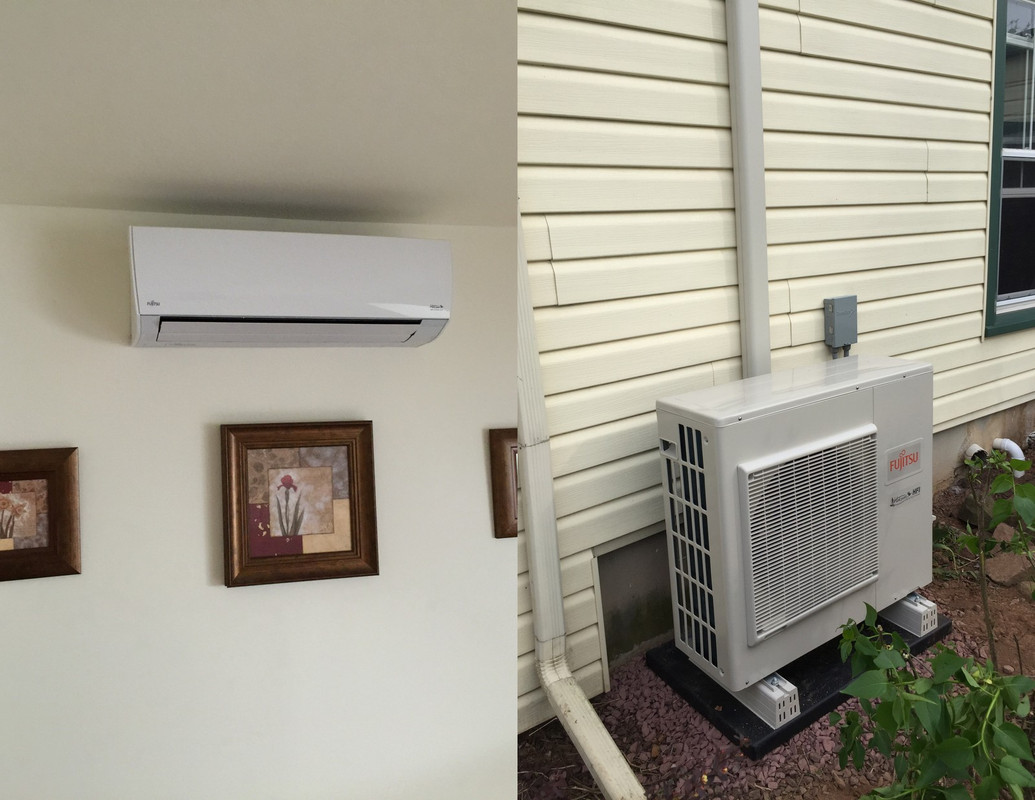
Your condensing system serves a comparable purpose as your evaporator coil but you can find the condensing system outside, usually on the side of your home. Nevertheless, as the evaporator coil absorbs heat, the condensing system releases heat (consider it as the exhaust pipeline for your house when you're attempting to cool it).
# 7 What are Refrigerant Tubes?
Refrigerant tubes connect your evaporator coil to your condensing coil. Refrigerant tubes are generally made from metal and are designed to hold refrigerant and to connect the indoor and outside systems.
# 8 What is a Thermostat?
Your thermostat is that little gadget installed on the wall somewhere inside your home that allows you to control your home's temperature (don't ask us where to find your thermostat, there's not actually a rule as to where they're placed-- they could be anywhere!). Did you know you can get a smart Wi-Fi linked thermostat that allows you to set the temperature level of your home from your phone?
# 9 What is Ductwork?
Your house's ductwork is what allows the conditioned air from your heater or A/C system to be dispersed around your house.
# 10 What are Vents?
Air vents enable your heated or cooled air to enter your living space from the ductwork.
# 11 What is a Heatpump?
A heat pump works for both heating and cooling. In the summertime, heatpump pump hot air out of your home and in winter season, heat pumps do the specific reverse.
A/C Sugestions for Homeowners.
This area is mainly directed at new property owners looking for HVAC recommendations but it applies to all homeowners.
# 12 You Ought To Know What Type ofHeating & Air Conditioning System You Have.
If you're a brand-new house owner, you need to understand what type of HVAC system you have. The normal system is a central air system which has all of the parts listed above in our HVAC tips for Newbies area. Your house might likewise have a ductless mini-split system or perhaps a window connected wall unit (yikes!). You ought to likewise know whether your furnace is electric, natural gas, or if your home utilizes a heatpump or boiler system.
# 13 Change Your Air Filters Frequently.
If you have actually just moved into your house, alter the air filter. Your home was probably listed for a couple of months prior to you purchased it, and even though the a/c unit probably wasn't running all that frequently, it's still an excellent idea to start with a fresh tidy air filter.
# 14 Ensure Your Condenser Unit is Clear of Debris.
Your condenser is normally in your side backyard, and is quickly forgotten. Overtime, shrubs and debris can grow or build up around your system, restricting its air circulation, making it work more difficult to cool your house.
# 15 Don't Close Your Vents.
Many new house owners are guilty of this one. In order to save energy, house owners close the vents in spaces they don't utilize thinking it will save them energy. In truth, this actually makes your HVAC system less efficient. Heat like to disperse itself uniformly within a things. When that things is your home, heat will enter into that closed-vent space anyhow, but it implies your HVAC system will work harder in order to produce an even temperature around your house.
Keeping air vents open permit equal temperature distribution throughout your house and keeps your Heating and Cooling system running efficiently. Bonus points for keeping your vents clean to prevent allergies and clogs.
# 16 Tidy Your Ductwork.
Did you know most home inspectors don't inspect ductwork? What this means for a brand-new house owner is that you won't know if your ducts are unclean or in requirement of repair. If your home appears dirty, or you discover your HVAC system making loud sounds as if it is working more difficult than it should, you should examine your ducts. Opportunities are, they're just filthy, however on the off opportunity that your ducts are leaking air, you need to make sure to call a HEATING AND COOLING professional to patch or replace your ducts.
# 17 Start Building a Relationship With Certified Specialists.
As a new property owner, you can't rely on your parents or your landlord to fix any home appliance issues in your house-- that's your duty now. Unless you work as a contractor, opportunities are you do not have a strong relationship with one. This goes for all house improvement contractors, however trust us when we say that your HVAC professional need to be top of the list. A/C systems have a great deal of little moving parts and play a big function in your house's comfort. The most common house issue is associated with Heating and Cooling so make sure you're not calling a complete stranger when you need to service your a/c or heating unit. A strong relationship with an A/C professional will conserve you thousands of dollars along the duration of your homeownership as your specialist will be extremely knowledgeable about your home, your Heating and Cooling system, and your expectations for cost and service.
Perk: Discover What a Manual J is.
Manual J is the estimation utilized to make certain you're getting the ideal sizeHeating and Cooling system for your house. It's a really complicated computations and we do not anticipate you to understand how to do one, however you must absolutely expect your HVAC professional to know how to do it. Running a manual J for your brand-new house is very essential so that you can install the right A/C system, otherwise, your system may not run efficiently or have difficulty heating or cooling your home.
Heating and Cooling Tips for Renters.
As a tenant, you still might would like to know a little bit about Heating and Cooling systems. Although your proprietor ought to be accountable for any Heating & Air Conditioning upkeep, you never know how long that will take.
# 18 Tidy Your HVAC System.
This goes without stating, but often it's simple to forego appropriate upkeep on a heating and cooling system when it's not really your Heating & Air Conditioning system. Clean your HVAC unit when you move into your new rental. Ensure the air filter is clean and make certain all the moving parts are lubed and running smoothly.
# 19 Renters Must Take Photos of Their Heating & Air Conditioning System.
As quickly as you relocate, take photos of your furnace, condenser, vents, and even ducts if you have access to them. This provide you some picture evidence for your property manager in case there's ever a problem with you HVAC system down the line.
# 20 Close Your Gas Valve.
If your heater works on natural gas, make certain you close your gas valve in the summer season when you do not need to heat your house. Natural gas can leakage from your system and can become a harmful circumstance. If you're renting a home and are not knowledgeable about the maintenance history of stated home, it's best to be on the side of caution.
Heating & Air Conditioning Tips for Summer.
You would not believe the number of times we're asked about the very best energy saving suggestions for summer or summertime thermostat settings. No, there isn't really an ideal A/C temperature level to save electrical energy, but here are some summer season Heating & Air Conditioning pointers that we understand will assist you optimize your Heating and Cooling performance. Here are our seasonal HEATING AND COOLING ideas for summertime.
# 21 Tidy Your Vents.
Southern states in the USA have mild winter seasons. This implies you're most likely not using your Heating & Air Conditioning system at all, allowing your vents to accumulate a great deal of dust. Prior to it gets hot enough to need to turn on your Air Conditioner, you need to do a quick examination on your vents and vacuum off any dust that has actually accumulated.
# 22 Buy a Smart Thermostat.
Buying a smart thermostat can include peace of mind when it pertains to remaining cool along with saving money since your thermostat can be set to maximize your HVAC system's performance.
Ever wonder what all the hype has to do with clever thermostats? Wi-fi linked thermostats, also understood as IoT thermostats (Internet of Things), can conserve you a great deal of money on utility costs and offers you a higher level of control over your house's climate.
# 23 Set up a Tuneup.
Your A/C unit will be working its hardest throughout summertime. Ensure you call a HVAC service technician to offer it a quick tune up before you fire it up and run it all summer season long. The last thing you desire is to discover out your A/C unit isn't dealing with the most popular day of the year.
A/C Tips for Spring.
If you're into spring cleaning, add A/C maintenance to the top of your list!
# 24 Check Your AC's Drainage Hole.
Many air conditioners have a drain hole for fluid accumulation from condensation to clear out. If your drain hole is congested, you may wind up with a great deal of water accumulation and a harmed Air Conditioning system.
# 25 Don't Forget About Your Dehumidifier.
If you live in a damp environment, your dehumidifier is your friend. Spring is an excellent season for performing preventative upkeep on your dehumidifier. Take the case off of your system and let it dry out air conditioning service mississauga completely. Take the extra action to vacuum it to make sure its additional dry and devoid of particles to ensure it stays working appropriately.
# 26 Keep Your Windows and Doors Closed.
We get it. Springtime is stunning and all house owners want to let some fresh air into their home. Simply keep in mind, spring is likewise allergic reaction season and if your windows and doors are exposed, you're welcoming all of those allergens into your house. If you absolutely need to have those windows and doors open nevertheless, we suggest purchasing a high quality air purifier.
A/C Tips for Winter.
# 27 Include Some Insulation to Your House.
Your HVAC system works actually difficult to heat up your house. If all the heat that your heater creates escapes your house, why even trouble with heating your home? Buy some quality insulation to get the finest A/C heating experience in winter season.
( That pink things is insulation. If your attic does not looks like this, it might require some more insulation or else your Heating and Cooling unit will not work as effectively).
# 28 Cover Your Outside A/C Unit.
You're most likely not blasting the AC in winter season time. To ensure your inactive outdoor Air Conditioner unit remains in top shape, think about covering it up to protect it from any unanticipated damage.
# 29 Set Up a Furnace Maintenance.
Remember when we said develop a good relationship with the very best local HVAC contractor you can find? Here's where it is available in handy. Phone your local HVAC professional and do a fast examination on your heating system. If your heating system has actually been off all year, you may desire to do a little tune up before keeping it on all winter long.